The Edit
Oceana Cruises – Where Dining Is the Destination
Most cruise lines treat food as an amenity. Oceania treats it as the point.
The line has built its reputation — and its loyal following — on a simple premise: that the quality of what you eat on board should be indistinguishable from what you’d expect at a serious restaurant on land. Over two decades of sailing, it has come closer to delivering on that premise than any other line in the premium-to-luxury category. The phrase The Finest Cuisine at Sea is a marketing claim on most ships. On Oceania, it functions as an operational standard.
The Ships
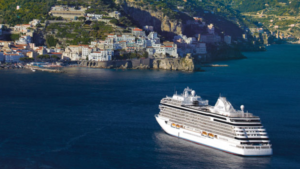
Oceania operates a fleet of eight ships across two distinct classes. The smaller R-class vessels — Regatta, Insignia, Nautica and Sirena — carry around six hundred and eighty-four guests and have the feel of a private club at sea. Intimate, unhurried and with a staff-to-guest ratio that makes personalised service genuinely possible. The larger Oceania-class ships — Marina, Riviera, Vista and the newest addition, Allura, which launched in July 2025 — carry up to twelve hundred guests and offer a broader range of dining venues and public spaces while retaining the culinary focus that defines the brand.
A further expansion is underway. Oceania Sonata, the first of a new Sonata-class, is scheduled to debut in August 2027, carrying approximately thirteen hundred and ninety guests and introducing two entirely new dining concepts — La Table par Maîtres Cuisiniers de France and Nikkei Kitchen — alongside the established restaurant programme.

Dining
This is where Oceania genuinely earns its reputation, and where the article should spend its time.
All specialty dining is included in the fare — no cover charges, no reservation anxiety. The range across the fleet is considerable.
Jacques, the French bistro restaurant that has been the culinary heart of the line since the beginning, serves classical French cooking with the kind of care that makes a meal there feel like a proper occasion — rotisserie duck, lobster thermidor, soufflés made to order. It is now available across the Oceania-class ships following its recent introduction to Vista and Allura.
Red Ginger handles Pan-Asian cooking — Thai, Korean, Japanese, Malaysian — with a depth of flavour and a kitchen that clearly enjoys what it does. The spicy duck and watermelon salad has been on the menu long enough to qualify as a classic, and the setting itself is one of the more atmospherically considered rooms at sea.
Polo Grill is the steakhouse — serious prime cuts, properly executed, with a wine list that can hold its own against good land-based equivalents. Toscana serves Italian with an emphasis on handmade pasta and the kind of simplicity that’s harder to achieve than it looks. The Grand Dining Room, which operates on an open-seating basis throughout the voyage, changes its menu daily and incorporates Jacques Pépin’s signature dishes alongside a broader international repertoire.
The culinary team is worth noting specifically. Oceania’s two Executive Culinary Directors — Alexis Quaretti and Eric Barale — are both inducted members of the Maîtres Cuisiniers de France, making Oceania the only cruise line in the world with two MCF members overseeing its food programme. That is not a marketing footnote; it reflects the seriousness with which the line approaches its kitchens.
The Culinary Centre
On the larger ships, the Bon Appétit Culinary Centre offers hands-on cooking classes taught by the ship’s chefs — ranging from knife skills and pasta making to regional cuisine from the destinations the ship is visiting. For food-focused travellers, the classes are genuinely instructive rather than demonstrative, and the ability to book a session that connects to the port call of the day adds a layer of engagement that most culinary programmes on ships don’t attempt.
Destinations
Oceania’s itinerary philosophy is destination-first and port-time generous. The line calls on over six hundred ports in more than one hundred countries, with a consistent emphasis on smaller, less-visited harbours alongside the established icons. Voyages range from seven nights to grand journeys of over two hundred days. The overnight port stays that appear regularly across the programme — allowing genuine evening time ashore — reflect a line that understands its guests want immersion rather than a checklist.
Who It’s For
Oceania sits in a meaningful space between premium and ultra-luxury — more personalised and considerably better fed than mainstream lines, without the price point of Seabourn or Regent. It works particularly well for food-focused travellers, those combining a cruise with serious destination exploration, and clients who want the social atmosphere of a mid-sized ship without sacrificing culinary quality. The smaller R-class ships suit those who prefer the most intimate experience; the Oceania-class ships offer more variety. Both deliver on the dining promise.
Travelling with The Wanderlust Edit
Oceania voyages arranged through The Wanderlust Edit include personalised guidance on ship and itinerary selection, cabin category recommendations and any applicable preferred partner benefits confirmed at the time of booking.
Every journey begins with a conversation.