On Location
Rome, and the Art of Arriving Slowly
Rome does not reward the visitor in a hurry. The city is layered in a way that takes time to understand — two thousand years of history occupying the same streets as a coffee bar that has been there since 1906 and a gelateria that has no presence online and no need of one. The monuments are extraordinary and worth every visit. But Rome reveals its best self to those who also leave space for the unplanned.
Three days is the minimum that does it justice. Four is considerably better.
Where to Stay
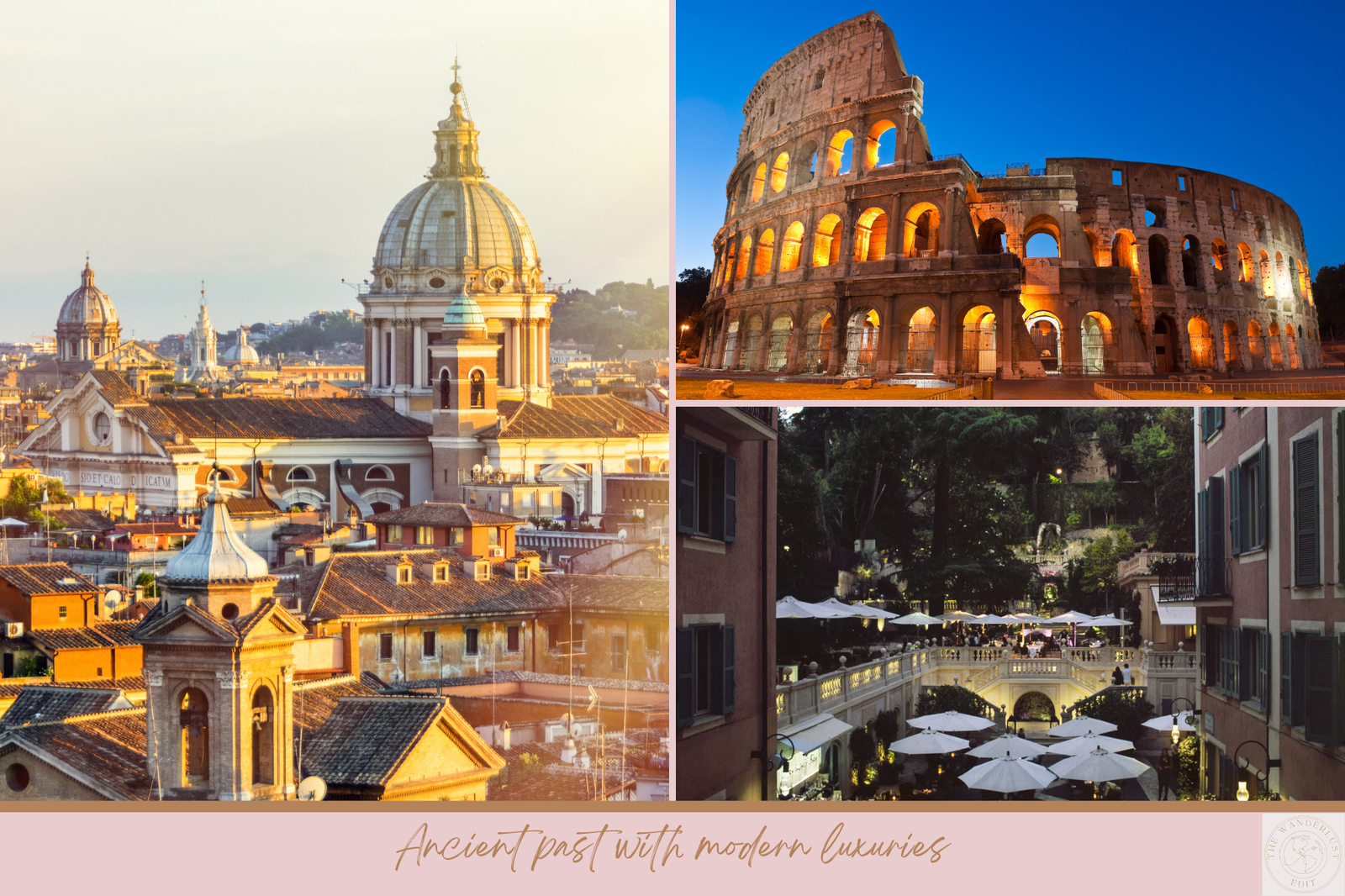
Hotel de Russie sits on the Via del Babuino, a short walk from the Piazza del Popolo and equally well-positioned for the Spanish Steps, the Pantheon and the Borghese Gallery. It is one of Rome’s most considered luxury hotels — the gardens, arranged in terraced levels behind the main building, are one of the most surprising and genuinely beautiful hotel spaces in the city. The Stravinskij Bar, which opens onto those gardens, handles an aperitivo hour as well as anywhere in Rome.
For those seeking something closer to the Vatican or with a preference for a more palace-hotel register, the Gran Meliá Rome on the Via Vittorio Veneto operates at a similarly high level and carries a different kind of Roman grandeur — broad avenues, La Dolce Vita associations and a rooftop with views across the city that are worth a drink regardless of whether you’re staying.
How to Spend the Time
Day One — The Ancient City
The Colosseum and the Roman Forum require advance booking and a morning to do properly. The scale of the Colosseum is the thing that photographs consistently fail to prepare you for — it is larger, and the engineering more impressive, than any prior familiarity with the image suggests. The Forum, immediately adjacent, rewards a slow walk and a guide who can bring the topography to life. Without context, it is a field of ruins; with it, it becomes one of the most significant pieces of ground in Western history.
Lunch near the Palatine Hill — the restaurants around the Circus Maximus are considerably better and less touristic than those immediately adjacent to the Forum — then an afternoon in the Trastevere neighbourhood, which handles the early evening particularly well. Dinner at Da Enzo al 29, a Roman trattoria that has been operating in the same family for generations and makes no concessions to the tourist palate.
Day Two — The Vatican and the Borghese
The Vatican Museums and Sistine Chapel require timed entry booked well in advance — the queue without a reservation is significant and largely avoidable. The Sistine Chapel is, in person, both more overwhelming and more intimate than it appears in reproduction — the scale of the ceiling relative to the room itself is the thing that registers first. The Raphael Rooms, which most visitors pass through quickly on the way to the Sistine, are worth slower consideration.
The afternoon belongs to the Borghese Gallery, which requires separate timed booking and limits visitors to two-hour slots — a constraint that is actually one of the gallery’s greatest assets. Bernini’s sculptures, in rooms designed specifically for them, are among the most extraordinary objects in European art. Book before you leave the UK.
Dinner at La Pergola at the Waldorf Astoria Rome — three Michelin stars, views across the city from the hilltop setting, and a wine list of extraordinary depth. Worth the occasion and the advance planning it requires.
Day Three — The Neighbourhood Rome
The Pantheon at opening, before the day’s visitors arrive, is one of Rome’s quieter pleasures — the light through the oculus in the early morning has a quality that the afternoon crowds don’t allow you to notice. The Campo de’ Fiori market handles a late breakfast well. The afternoon in the Jewish Ghetto — one of Rome’s oldest and most quietly fascinating neighbourhoods, with a history that extends back to the second century BCE — is worth the time.
A final evening gelato from Giolitti, which has been producing some of Rome’s finest since 1900, is the right way to close a Roman stay.
A Note on the Heat
Rome in July and August is genuinely very hot — temperatures routinely exceed 35°C, and the city’s stone surfaces retain and radiate the heat through the evening. May, June, September and October are considerably more comfortable and only marginally more competitive for accommodation. If your travel dates are flexible, the shoulder months are worth choosing.
Travelling with The Wanderlust Edit
Bookings at Hotel de Russie or Gran Meliá Rome arranged through The Wanderlust Edit may include preferred partner benefits such as a hotel or dining credit, complimentary daily breakfast, room upgrade on arrival where available, and early check-in and late checkout subject to availability. Benefits vary by property, room category, season and availability and will always be confirmed at the time of booking.
Every journey begins with a conversation.