On Location
Uluru, and the Properties That Do It Justice
There are very few places in the world that genuinely defy description until you’re standing in front of them. Uluru is one of them.
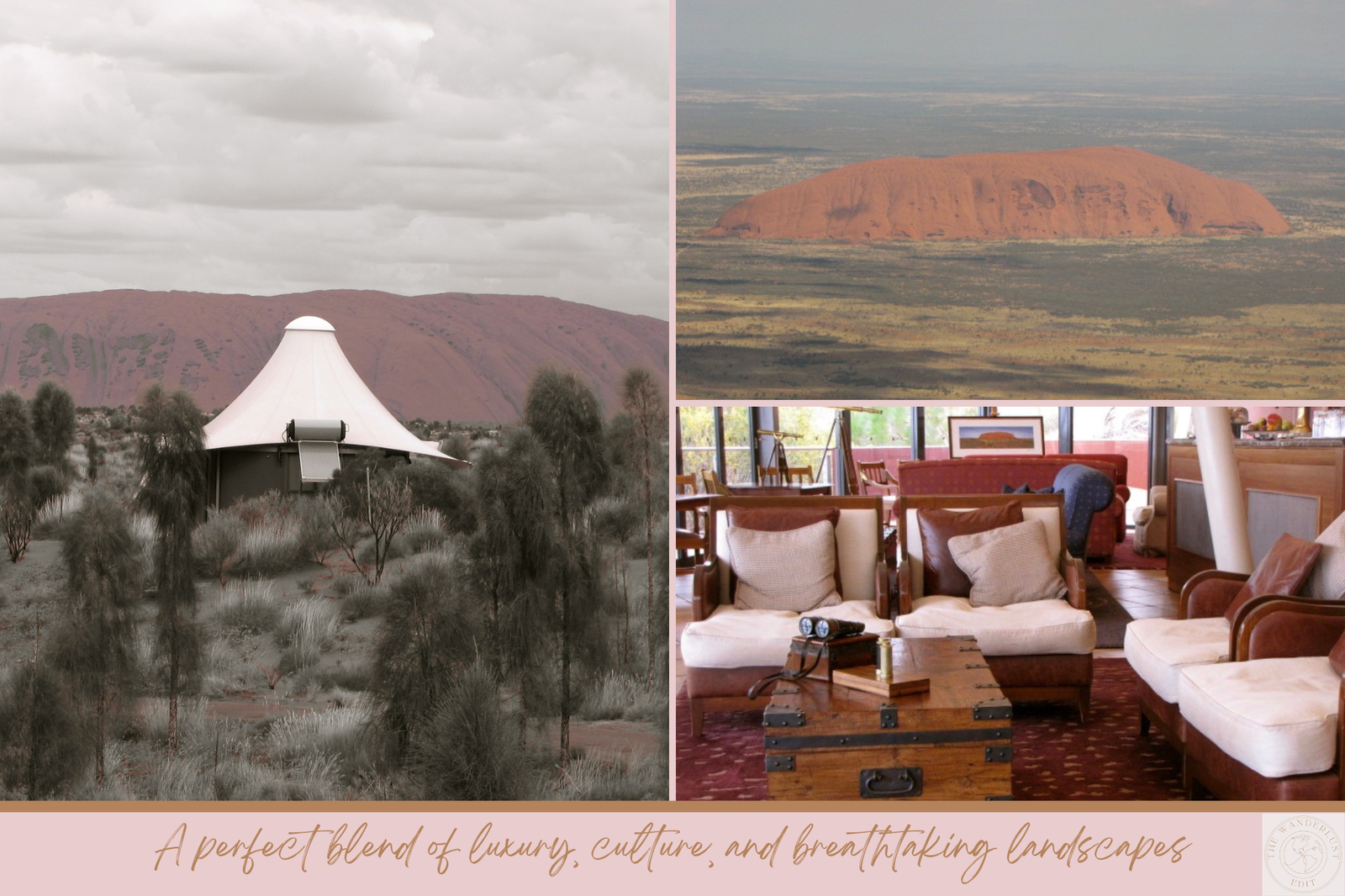
No photograph — and there are millions — prepares you for the scale of it. The way it rises, without preamble, from an absolutely flat desert landscape. The colour, which isn’t simply red but shifts through ochre, burnt sienna and deep purple depending on the hour and the quality of the light. And the silence, which at dawn especially has a quality that feels almost deliberate — as though the place is asking you to pay attention.
I’ve recommended Uluru to clients for years. It sits on almost every serious Australia itinerary I design, and not because it’s the obvious thing to include. Because those who make the effort to go — and it does require commitment from the UK — rarely describe it as anything other than the highlight.
The Property
Longitude 131° is the right way to experience it.
The camp sits within direct sightline of Uluru — a deliberate positioning that means the rock is visible from the moment you wake until the light fades completely. The tented pavilions are more substantial than the word tented implies: generously proportioned, carefully designed, with private decks that face the desert and bathrooms that don’t make any compromises. This is not glamping. It’s one of Australia’s most considered luxury properties, and it wears that lightly.
The ratio of staff to guests is high, the food is better than you might expect this far from a city, and the guiding — both cultural and practical — is genuinely exceptional. Longitude 131° works closely with Anangu guides whose relationship with this landscape is ancestral rather than professional, and those conversations, if you’re open to them, tend to shift something.
How I’d Spend Three Days
Day One — Arrival and the Desert at Dusk
The flight into Ayers Rock Airport takes around three hours from Sydney or two and a half from Melbourne. The transfer to Longitude 131° is short, and the property team will have already understood what kind of welcome you need after a long journey from the UK.
The first evening is best kept simple. A sunset viewing of Uluru — the light show at that hour is the thing most clients mention first when they come home — followed by dinner at Table 131°, the camp’s open-air restaurant. The Sounds of Silence dinner, held on a raised platform in the desert with a field of stars overhead, is available as an alternative and is worth booking in advance.
Day Two — Culture and the Olgas
The guided walk around the base of Uluru takes three to four hours and covers the rock’s cultural and geological history in genuine depth. It’s not strenuous but it is long — wear good shoes and start early before the heat builds. The rock’s surface tells a more complex story than it appears from a distance, and the Anangu guides contextualise it in ways that no guidebook does justice to.
Kata Tjuta — known as The Olgas — is a forty-five minute drive from Uluru and often overlooked by visitors who feel the main attraction is enough. It shouldn’t be. The Valley of the Winds walk through these thirty-six domed rock formations is one of the most dramatic walks in Australia, and the sense of scale is, if anything, greater than Uluru itself.
The Field of Light — artist Bruce Munro’s installation of fifty thousand stemmed spheres across the desert floor — is best experienced at dawn or dusk and is a genuinely moving piece of work in this landscape. Longitude 131° can arrange access as part of a guided experience.
Day Three — Sunrise, Then Departure
Set an alarm. The sunrise over Uluru is the reason people extend their stay — the rock catches the first light before anything else does, and for approximately twenty minutes the colour is unlike anything I can adequately describe. Coffee in hand, from your deck or from a designated sunrise viewing point, this is the moment most clients tell me they’ll never forget.
A helicopter flight over the rock and surrounding desert is available if your flight schedule allows — thirty minutes from the air gives a perspective that makes the scale of both Uluru and Kata Tjuta finally make sense. Worth doing if the timing works.
A Note on Getting There
Uluru requires planning from the UK. The routing typically goes via Dubai, Singapore or Hong Kong to Sydney or Melbourne, then a connecting domestic flight to Ayers Rock Airport. Total journey time is around twenty-four hours. The effort is considerable and entirely worth it — but it’s worth building the wider Australian itinerary properly around it rather than treating Uluru as a standalone two-night add-on. Three nights at Longitude 131° is the minimum that does the destination justice. Four is better.
Travelling with The Wanderlust Edit
Bookings at Longitude 131° arranged through The Wanderlust Edit may include preferred partner benefits such as a spa credit, daily breakfast, complimentary Wi-Fi, early check-in and late checkout subject to availability. Benefits vary by room category, season and availability and will always be confirmed at the time of booking.
Every journey begins with a conversation.