On Location
Iceland, and Why New Year’s Changes Everything
Iceland holds a particular place in my travel life. I’ve been at different times of year and for different reasons, but New Year’s Eve in Reykjavík is the experience I find myself recommending most often — and the one that’s hardest to adequately describe without sounding like you’re exaggerating.
The city celebrates with a scale and spontaneity that’s unlike anywhere else I’ve spent the turn of a year. Bonfires are lit across neighbourhoods throughout the evening — a tradition that goes back centuries — and at midnight, a fireworks display erupts simultaneously across the entire city, set against a sky that, if the conditions are right, is already moving with the Northern Lights. It’s one of those moments that earns the word extraordinary without having to work for it.
But Iceland rewards visitors in every season. The summer solstice brings near-perpetual daylight and a landscape of lupins and moss in colours that feel almost artificial. Autumn brings the first real chances of aurora sightings without the full depth of winter. And winter itself — beyond New Year’s — has a stillness and drama that draws people back year after year.
The Hotel
ION City Hotel sits on Laugavegur Street — Reykjavík’s main artery, and the right place to be based. The design is contemporary Scandinavian without being cold: considered materials, a strong sense of place, and a building that wears its setting well. The restaurant, Sumac, serves a fusion of Icelandic and Eastern Mediterranean ingredients that works considerably better than it might sound on paper. Worth booking a table for the first evening rather than venturing out immediately after a long day of travel.
For those seeking something more immersive and closer to the landscape itself, ION Adventure Hotel — the sister property outside Reykjavík, near Þingvellir — is worth considering as a base for the Golden Circle days, or as a one-night extension to a Reykjavík stay. The aurora viewing from there, when conditions allow, is exceptional.
How I’d Spend Four Days
Day One — Reykjavík
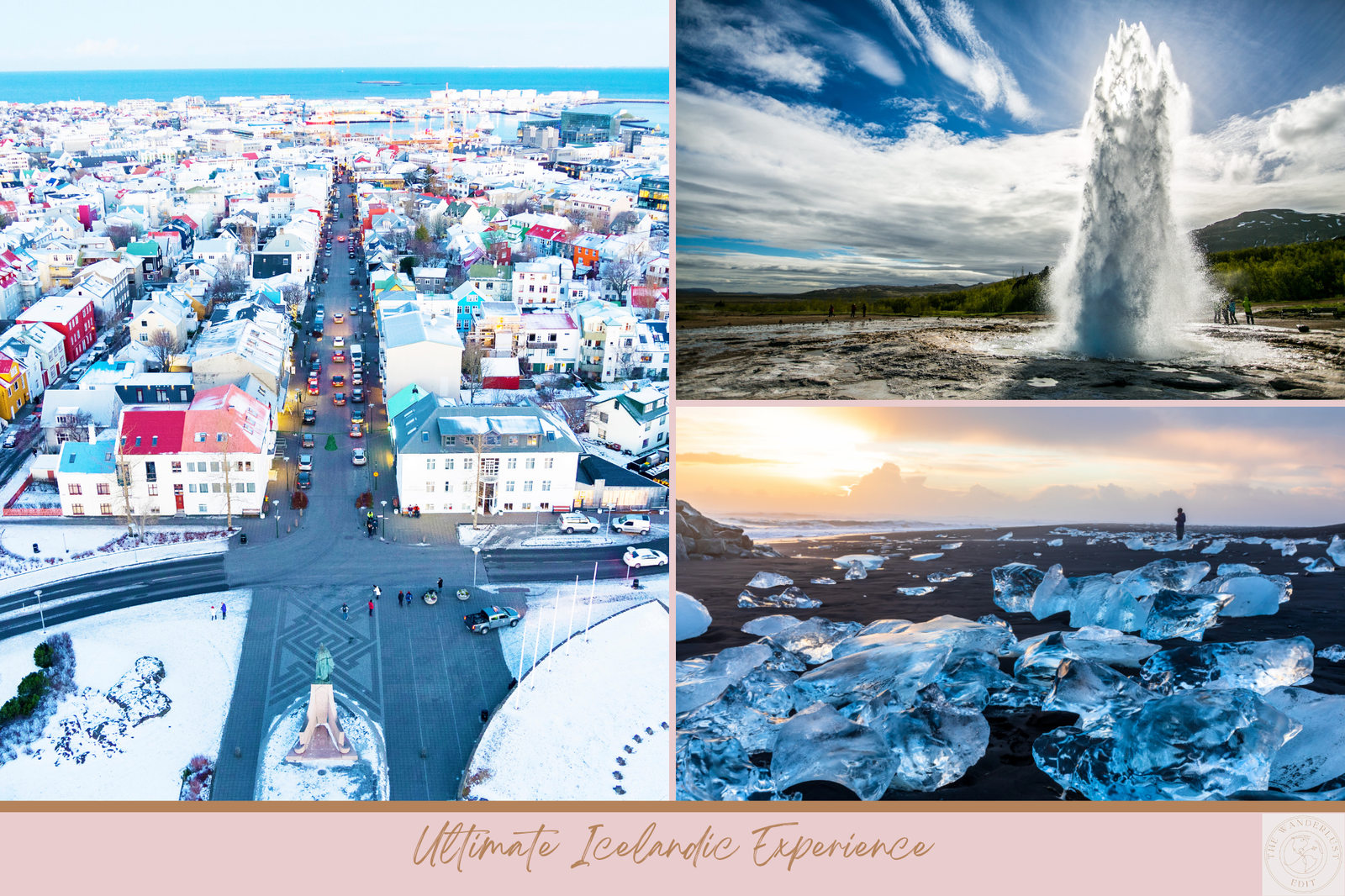
The city is compact enough to cover on foot, which is the right way to approach it. Hallgrímskirkja — the modernist church that defines the Reykjavík skyline — is worth the climb to the observation tower for the view across the city and out to the bay. Harpa, the concert hall on the waterfront, is architecturally extraordinary and regularly hosts performances worth checking in advance. The old harbour area has the best lunch options: Messinn for fish, Bergsson for something lighter.
Day Two — The Golden Circle
The Golden Circle is well-trodden for good reason. The three anchors — Þingvellir National Park, the Geysir geothermal area and Gullfoss waterfall — are each genuinely impressive, and the drive between them through volcanic landscape has its own austere beauty.
Þingvellir is where the North American and Eurasian tectonic plates visibly separate — a fissure you can walk along, and one of the few places on earth where that kind of geological drama is accessible on foot. Strokkur at Geysir erupts every few minutes and never quite loses its capacity to surprise. Gullfoss in winter, with ice forming along the edges of the falls, is the most dramatic of the three.
End the day at Sky Lagoon rather than the Blue Lagoon — it’s quieter, the design is more considered, and the seven-step ritual is a genuinely restorative way to close an active day. The infinity edge over the ocean is the detail that stays with you.
Day Three — The South Coast
The south coast drive is Iceland’s most concentrated stretch of natural drama. Seljalandsfoss allows you to walk behind the waterfall — wet, cold and worth every second of it. Skógafoss, a few kilometres further, is wider and more powerful, and the staircase alongside it leads to a clifftop path that rewards the climb with views across the coastline.
Reynisfjara Black Sand Beach should be approached with awareness — the waves here are unpredictable and dangerous closer to the shore than they appear. The basalt columns that rise from the sand are extraordinary, and the black sand itself has a quality that makes everything around it look more dramatic. Dinner at Sjávargrillið back in Reykjavík — a serious seafood restaurant — is the right way to end the day.
Day Four — Departure
Keflavík Airport is about forty-five minutes from Reykjavík, and most flights leave in the late morning or early afternoon. The final morning is best kept unhurried — the café culture around Laugavegur is excellent, and a slow breakfast before departure is a better use of time than trying to fit in one more activity.
A Note on Timing
For Northern Lights, the season runs roughly from September to April — the further from the city you go, the better the chances. A clear, dark sky is essential; Iceland’s weather is famously unpredictable, and flexibility in your schedule improves the odds considerably. A good guide with local knowledge of cloud patterns and viewing spots makes a meaningful difference. We build that access into any Iceland itinerary we design.
Travelling with The Wanderlust Edit
Iceland itineraries designed through The Wanderlust Edit are planned around your specific travel dates, interests and pace — whether that’s four days focused on Reykjavík and the south coast, or a longer journey taking in the highlands, the Westfjords or the complete Ring Road. Hotels, transfers, guiding and any preferred partner benefits are confirmed at the time of planning.
Every journey begins with a conversation.