On Location
Berlin, and Why It Rewards Those Who Stay Long Enough to Understand It
Berlin is one of the few cities in the world that defies a single characterisation. It has been destroyed, divided, reunified and reinvented within living memory — and that history is not background detail. It is present in the city’s texture in a way that makes Berlin unlike anywhere else in Europe.
It is also, quietly, one of the most creatively alive cities on the continent. The art scene is genuinely significant, the music culture runs deeper than its reputation for nightlife suggests, and the food scene — which has spent years being underestimated — is now one of the most interesting in Germany.
Three days is the minimum that does it any justice. Four is better.
Where to Stay
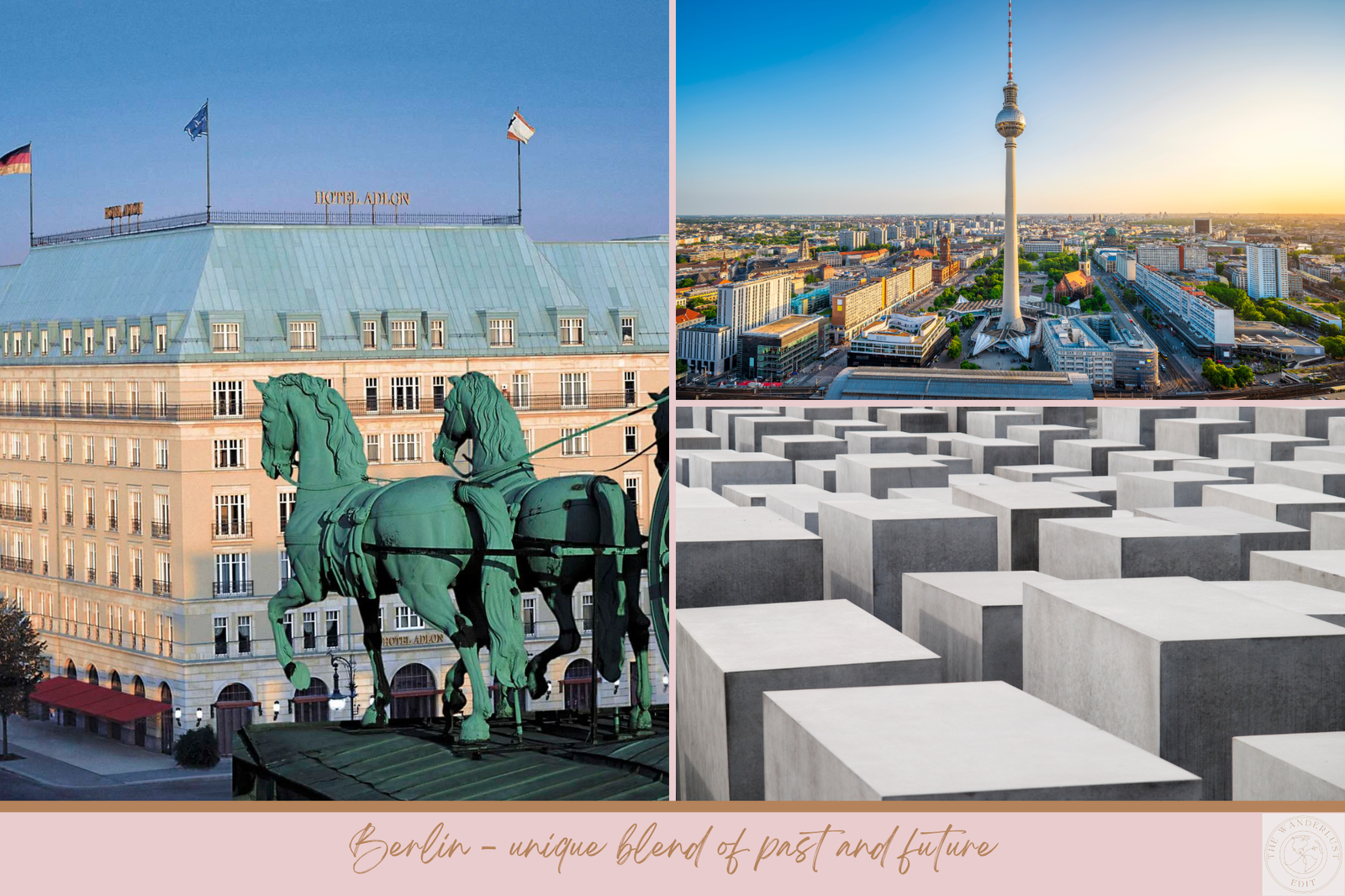
The Hotel Adlon Kempinski sits at the eastern end of Unter den Linden, directly beside the Brandenburg Gate — a position that gives it both the most historically charged address in Berlin and, from the upper floors, views across the Tiergarten that make the city’s scale legible in a way that ground level doesn’t allow.
The Adlon’s history is inseparable from Berlin’s own — the original building opened in 1907 and hosted everyone from Charlie Chaplin to the Kaiser; the current building, which opened in 1997 after the original was destroyed in 1945, carries that heritage with considerable self-awareness. The service is formal, the rooms are well-appointed, and the breakfast service in the Lorenz Adlon Esszimmer is as good a way to begin a Berlin morning as any.
For those seeking something with a more contemporary character, Das Stue in the Tiergarten district offers a different register entirely — a smaller, design-led property in a converted 1930s embassy building, with a spa, a Michelin-recommended restaurant and an atmosphere considerably quieter than the Adlon’s grand hotel pace.
Art and Culture
The museum landscape is extraordinary and concentrated enough to cover meaningfully in a few days. Museum Island — a UNESCO World Heritage Site in the Spree River — houses five of the world’s great museums within walking distance of each other. The Pergamon, currently partially closed for restoration but still operating its principal galleries, contains the Ishtar Gate and the Pergamon Altar — objects of a scale and ambition that make the visit essential. The Neues Museum houses the Nefertiti bust, which remains one of the most quietly extraordinary objects in any museum anywhere.
The Berlinische Galerie, in Kreuzberg, handles the twentieth and twenty-first century art that the Museum Island collections don’t address — a strong permanent collection of Berlin art and a programme of temporary exhibitions that rewards checking in advance.
The East Side Gallery — the 1.3 kilometre stretch of the Berlin Wall painted by international artists following reunification — is best visited early in the morning before the crowds arrive. The murals are significant and the context is irreplaceable. Allow an hour rather than a rushed twenty minutes.
The Topography of Terror, on the site of the former SS and Gestapo headquarters, is the most important of Berlin’s Holocaust memory sites — sober, well-documented and genuinely essential for understanding the city’s history. Entry is free.
Dining
Tim Raue, in Kreuzberg, holds two Michelin stars and has built an international reputation on a style of cooking that draws from Asian culinary traditions — particularly Chinese, Japanese and Thai — applied with the rigour and precision of European fine dining. The result is genuinely distinctive and unlike anything available in London or Paris at this level. Book well in advance; prime evening slots fill quickly.
For something more casual but no less considered, Nobelhart & Schmutzig on Friedrichstrasse operates on a single daily menu built entirely around regional German producers. The philosophy — radical seasonality, complete transparency of sourcing — is the most serious expression of nose-to-tail, field-to-fork cooking in the city, and the room, at a long bar facing the open kitchen, makes for one of the more memorable dining experiences in Berlin.
Nightlife
Berlin’s club culture is genuinely serious and deserves to be treated as such rather than approached as a tourist experience. Berghain, in a former power station near Ostbahnhof, operates a door policy that selects for those who understand what the space is for — a techno venue of international significance where the music runs continuously from Friday night to Monday morning. Sisyphos, on the Spree in Rummelsburg, has a more festival-like atmosphere across multiple rooms and outdoor spaces, and is considerably more accessible while remaining authentic. Neither requires advance booking; both require patience.
A Note on Berlin’s Character
Berlin is a city that asks something of you. It is not immediately beautiful in the way that Paris or Prague are — the rebuilding after 1945 and the decades of division have left a cityscape that is uneven and occasionally difficult. But the reward for those who engage with rather than resist that complexity is a city that reveals itself gradually and stays with you considerably longer than more immediately photogenic destinations. Go with time, go with curiosity, and go prepared to be surprised.
Travelling with The Wanderlust Edit
Bookings at the Hotel Adlon Kempinski or Das Stue arranged through The Wanderlust Edit may include preferred partner benefits such as a hotel or dining credit, complimentary daily breakfast, room upgrade on arrival where available, and early check-in and late checkout subject to availability. Benefits vary by property, room category, season and availability and will always be confirmed at the time of booking.
Every journey begins with a conversation.