On Location
Madrid, and Why It Rewards Those Who Slow Down
Madrid is one of those cities that takes a day to calibrate to. The scale of it, the energy of it, the particular hours it keeps — lunch at two, dinner at nine, the streets filling rather than emptying as the evening progresses. Visitors who resist the rhythm tend to find Madrid overwhelming. Those who give in to it find one of the most genuinely alive cities in Europe.
The food alone would justify the trip. The art makes it essential.
Where to Stay
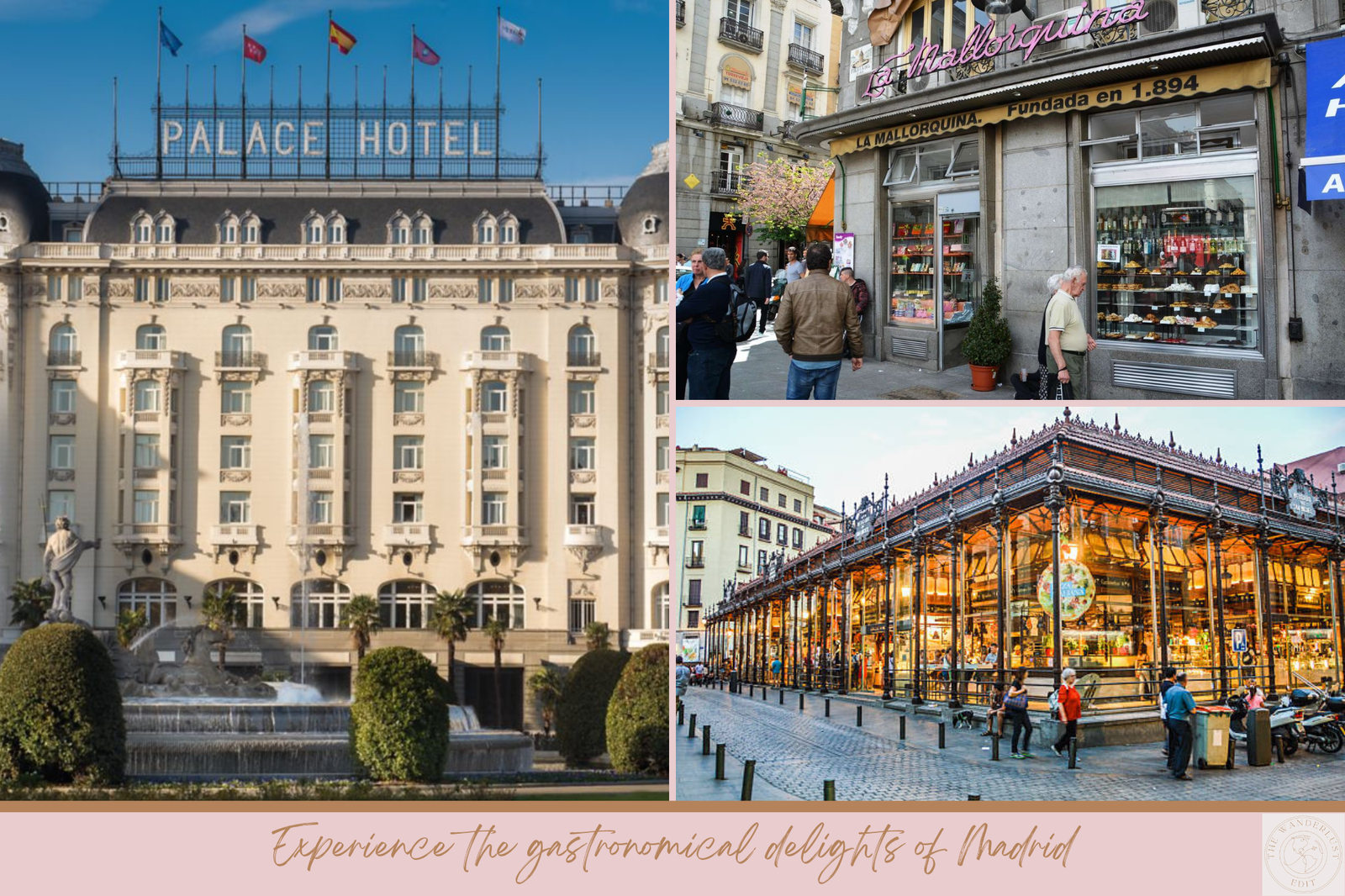
The Westin Palace sits on the Plaza de las Cortes, a short walk from the Prado, the Reina Sofía and the Thyssen-Bornemisza — the three museums that together form one of the most concentrated collections of Western art in the world. The building dates from 1912, the stained-glass rotunda that covers the central lounge is extraordinary, and the position gives access to the Golden Triangle of Art on foot, which is the right way to approach it.
For those seeking a more contemporary base, the Four Seasons Hotel Madrid — which opened in 2020 in the restored Canalejas building, combining five historic structures in the city centre — offers a different register entirely: modern Spanish design, a strong restaurant programme and a rooftop pool that handles a Madrid afternoon well.
The Art
The Prado is non-negotiable and requires more time than most visitors give it. The collection — Velázquez, Goya, El Greco, Titian, Rubens — is too deep to cover in a single morning. The Goya rooms alone, with the Black Paintings that he produced directly onto the walls of his home near the end of his life, are worth a visit in their own right. Book timed entry in advance; the queue without a reservation is significant.
The Reina Sofía, a short walk south, holds Picasso’s Guernica — the most politically significant painting of the twentieth century and, in person, a work of scale and force that reproduction entirely fails to communicate. Allow at least two hours; the permanent collection surrounding it is strong.
The Thyssen-Bornemisza, between the two, plugs the gaps that the Prado and Reina Sofía leave — Impressionism, early Modernism, American painting — and is the most varied and often the most immediately pleasurable of the three.
The Royal Palace, on the western edge of the old city, is worth a morning — the state rooms are genuinely grand, the views over the Casa de Campo are the best in Madrid, and the Sabatini Gardens alongside it are a good place to recover from the scale of what you’ve just seen.
Dining
Sobrino de Botín on Calle de Cuchilleros is the oldest continuously operating restaurant in the world — founded in 1725 and celebrating its third centenary in 2025. The wood-fired oven has been burning since it opened. The cochinillo asado — roast suckling pig — and cordero — roast lamb — are what you go for, cooked in the Castilian tradition that hasn’t changed in three hundred years. Book well in advance; it fills consistently.
La Mallorquina at Puerta del Sol has been serving pastries since 1894 and is the right place for a Madrid breakfast — the napolitanas de crema are the thing to order, taken standing at the counter downstairs in the way that Madrileños have been doing it for over a century. The upstairs salon, overlooking the plaza, handles a slower morning well.
For a more contemporary Madrid dining experience, DiverXO — David Muñoz’s three Michelin-starred restaurant — is one of the most inventive and technically ambitious restaurants in Europe. It requires booking months in advance and an appetite for theatricality alongside the cooking. Worth the planning if that register appeals.
For something less formal but equally considered, Lakasa in the Chamberí neighbourhood handles modern Spanish cooking in a relaxed setting that feels entirely local — the kind of restaurant that requires a recommendation to find and rewards the effort considerably.
Shopping
The Salamanca district — bounded by the Paseo de la Castellana and the Retiro — covers luxury shopping in a neighbourhood that feels considered rather than commercial. Calle de Serrano and Calle de Claudio Coello are the two streets to know. For more individual retail, the Malasaña and Chueca neighbourhoods have a different energy entirely — independent boutiques, design stores, record shops — and reflect the Madrid that exists beyond the tourist circuit.
A Note on Timing
Madrid in July and August is hot — temperatures regularly exceed 35°C — and many Madrileños leave the city during August. The city itself remains open and functional, but it operates at a different pace. May, June, September and October are considerably more comfortable and offer the full Madrid experience. The Retiro Park in spring, when the roses are in bloom, is one of the most understated pleasures in Spanish travel.
Travelling with The Wanderlust Edit
Bookings at The Westin Palace or Four Seasons Hotel Madrid arranged through The Wanderlust Edit may include preferred partner benefits such as a hotel or dining credit, complimentary daily breakfast, room upgrade on arrival where available, and early check-in and late checkout subject to availability. Benefits vary by property, room category, season and availability and will always be confirmed at the time of booking.
Every journey begins with a conversation.